
.webp)
Nepal's identity as a travel destination is as ancient as its myths and as dynamic as its mountains.
The story of travel to and from this Himalayan nation is a rich tapestry woven from threads of
pilgrimage, diplomacy, art, and adventure. This article traces the fascinating evolution of travel
in Nepal, from its legendary origins to its modern tourism industry.
The
Mythical Beginnings: Legends and Pilgrimage
The very creation of the Kathmandu Valley is rooted in a journey. According to legend, the valley
was once a vast lake. Manjushree, a divine saint from China (or Tibet), came on a pilgrimage and
saw a brilliant lotus floating at the lake's center. To reach the sacred site, he cut a gorge at Chobhar,
draining the water and creating the fertile Kathmandu Valley we know today. The Manjushree Cave
near this gorge now stands as
a testament to this myth.
This theme of sacred travel continues with other figures. Lord Krishna is said to have visited and
prepared the land for settlement, while Emperor Ashoka from India visited Lumbini in 250 B.C.,
erecting his famous pillar to mark the birthplace of Buddha. He also built stupas in Patan and his
daughter, Charumati, settled in the valley,
strengthening cultural ties.
The
Lichchavi and Malla Dynasties: Diplomacy and Art Flourish
From 400 to 750 A.D., the Lichchavi Dynasty solidified Nepal's cultural and diplomatic travel.
Amshu Verma married his daughter, Princess
Bhrikuti, to the Tibetan King Tsrong Tsong Gompo. She is credited with
spreading Buddhism to Tibet, making her one of the most significant cultural
ambassadors in Asian history.
The most celebrated traveler of this era was Arniko,
a prodigious artist from the Kathmandu Valley. In the 13th century, he was
invited to Tibet and later to the court of Kublai Khan in China. He took
Nepal's distinct pagoda-style architecture to new lands, leaving an indelible
mark on Asian art and architecture.
During the subsequent Malla Dynasty (c.
1201-1779), the valley became a hub of art and culture. The magnificent temples,
palaces, and squares built during this period, which are now UNESCO World
Heritage Sites, attracted pilgrims and traders from Tibet, India, and China.
This era also saw the first Westerners arrive, aiming to establish trade and
extend Christianity.
The
Unification and Early Foreign Contact (1767-1950)
Prithvi Narayan Shah's unification of Nepal in
1768 marked a new chapter. The Treaty of Sugauli in 1816 formalized
relations with the British East India Company, leading to more regular visits
from Europeans.
A pivotal moment came in 1850 when Jung Bahadur Rana
became the first Nepalese prime minister to visit Europe. His trip to
Britain opened diplomatic channels and piqued foreign interest in the isolated
kingdom. This was reciprocated when King George V visited Nepal for a hunting
expedition in 1911.
The Birth
of Modern Tourism (1950s Onwards)
The 1950s were a revolutionary decade for Nepalese tourism,
coinciding with the fall of the Rana regime.
Conquering the Giants: The world's eyes turned
to Nepal's Himalayas. Maurice Herzog's ascent of Annapurna I in 1950 and Sir
Edmund Hillary and Tenzing Norgay Sherpa's historic first ascent of Mt. Everest
in 1953 catapulted Nepal onto the global stage as the ultimate
adventure destination.
First Tourist Visa and Hotel: In 1952, Boris
Lisanevich, a legendary hotelier, was issued the first tourist visa. He
established the Royal Hotel in Jawalakhel, Nepal's first modern
hotel, and played a key role in inviting the first commercial tourist groups.
Infrastructure Development: The government
established the National Tourism Council (1956) and Royal Nepal
Airlines Corporation (1958), creating essential infrastructure for the
growing industry.
The
Hippie Trail and Beyond
The 1960s and 70s saw the "Hippie Era" in
Nepal. Travelers from around the world flocked to Freak Street in
Kathmandu, drawn by the freely available cannabis and the quest for
spiritual enlightenment. While this counterculture wave put Nepal on the
backpacker map, it eventually faded after the government banned cannabis in
1973.
This shift paved the way for more structured tourism. The
first travel agency, Mountain Travel Nepal, was established in
1964, specializing in trekking and expeditions. Luxury hotels like the Hotel
Annapurna opened, catering to a broader range of visitors.
Modern
Tourism: Master Plans and National Campaigns
From the 1980s onwards, Nepal diversified into adventure
sports like rafting and paragliding. The government launched national tourism
campaigns like Visit Nepal 1998 and Nepal Tourism Year
2011 to boost arrivals.
Despite setbacks from political instability and the
devastating 2015 earthquake, Nepal's tourism industry has shown remarkable resilience.
Today, it promotes its diverse offerings under the slogan "Naturally
Nepal, Once is Not Enough," highlighting everything from world-class
trekking and wildlife safaris to profound spiritual and cultural pilgrimages.
Conclusion
From the mythical journey of Manjushree that created the
Kathmandu Valley to the modern adventurer trekking in the Himalayas, travel has
been the lifeblood of Nepal's cultural narrative. Its history is not just a
record of visitors, but a story of cultural exchange, artistic inspiration, and
the timeless human desire to explore one of the most captivating countries on
Earth.


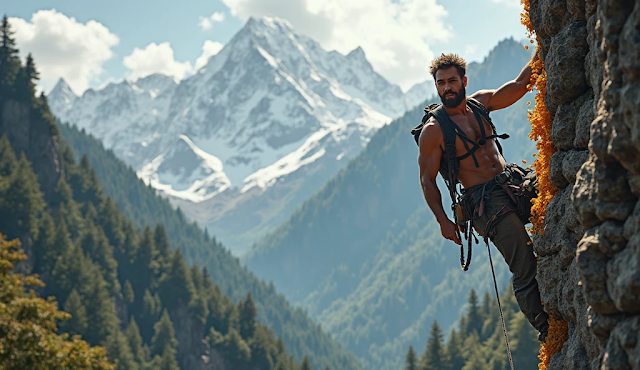
.webp&description=Origin of Tourism in Nepal from Ancient Time)
0 Comments